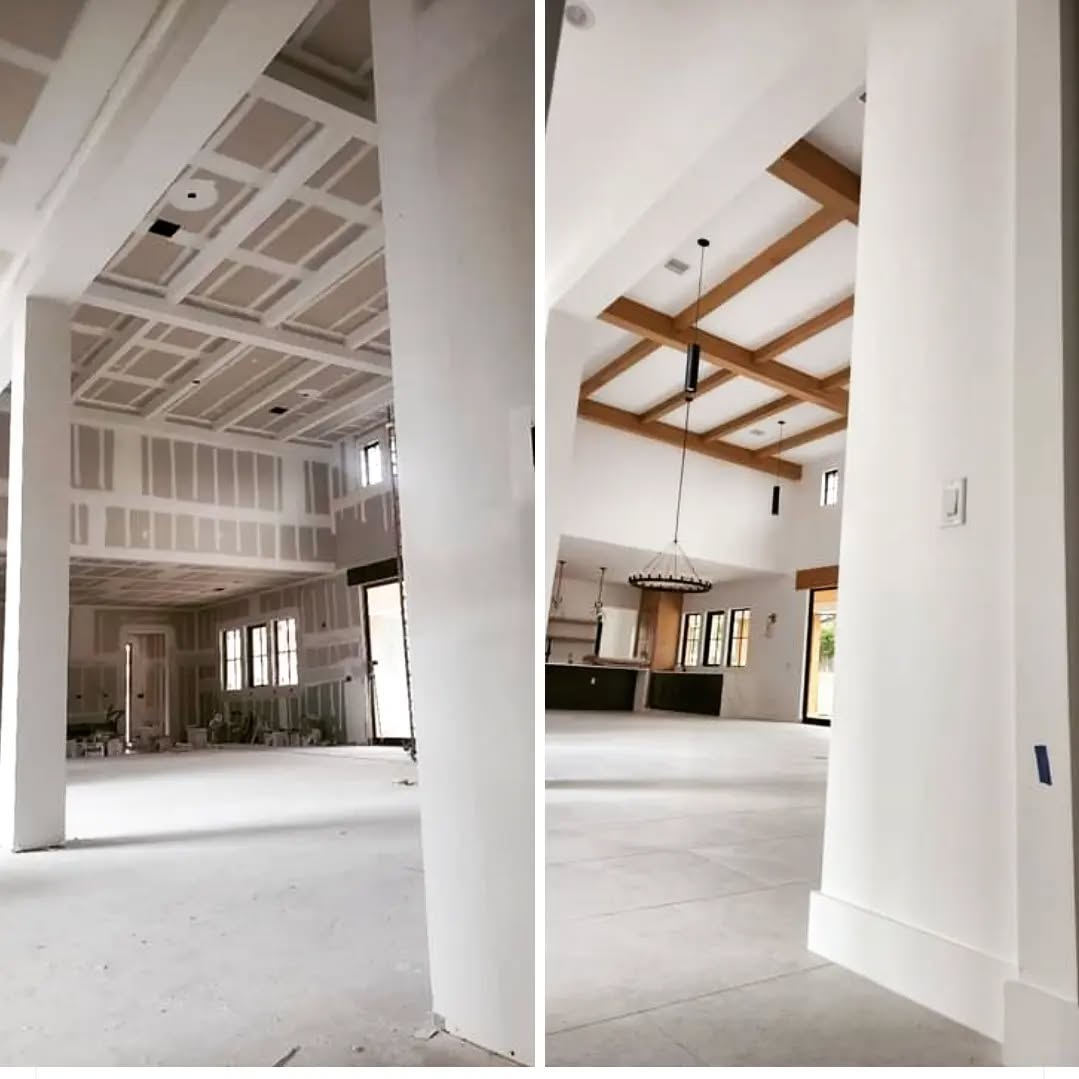
Professional Drywall Installation in Temple TX
Drywall installation is not just hanging board on studs. In Temple, it decides whether your walls stay flat or develop nail pops and cracks within a few years.
ROA Drywall handles professional drywall installation in Temple TX for new construction, room additions, and garage conversions across Bell County.
Temple sits on Houston Black Clay, locally called black gumbo. That soil moves with every season. Installation done right accounts for that movement from the first panel. Installation done wrong creates callbacks.
This guide covers what professional drywall installation in Temple TX actually involves at a technical level, what separates a proper install from a rushed one, and how ROA delivers on every project.
Table of Contents
Why Installation Quality Matters More in Temple
Bell County clay is a Vertisol. It swells when wet and contracts when dry, cycling through that range every season without stopping.
That movement travels up through the slab and into the framing. Every fastener, joint, and panel edge takes stress from it.
A wall installed with inconsistent fastener depth or poorly placed joints shows that stress within a few years.
The most common early-failure signs in fast-built Temple homes are nail pops and joint cracks. Both trace back to installation shortcuts, not just soil behavior. Proper installation is the cheapest insurance against both.
We see the result of rushed installs constantly in our drywall repair work across Temple. Getting the install right the first time avoids that repair bill entirely.
Panel Selection for Temple Homes
Panel choice is the first decision in any install, and the wrong board in the wrong location fails early. ROA selects panel type and thickness by application, not by whatever is cheapest on the truck.
- Half-inch standard board: the default for interior walls and ceilings in most Temple residential rooms.
- Five-eighths inch Type X: required for garage walls, fire-rated assemblies, and ceilings with 24-inch joist spacing to prevent sag over time.
- Moisture-resistant board: greenboard or cement board in bathrooms, laundry rooms, and utility spaces where standard gypsum fails in humid conditions.
- Ceiling-rated board: sag-resistant panels on wide-span ceilings where standard board droops between framing members over the years.
Temple summers are humid and hard on interior building materials.
Putting standard board in a bathroom to save a few dollars produces a moisture failure that costs far more to fix than the upgrade would have cost.
Fastener Patterns That Prevent Nail Pops
Nail pops are the single most common complaint in new Temple homes. They are almost always an installation problem, not a materials problem.
Here is what causes them. Fasteners driven too deep break the paper face and lose grip. Fasteners not driven deep enough sit proud and telegraph through the finish.
Fasteners driven into wet framing back out as the wood dries and the clay soil moves beneath the slab.
Proper installation uses drywall screws at code-correct intervals, driven to the correct depth that dimples the paper without tearing it. We check fastener depth as we go, not after the finish reveals the problem.
On ceilings, we tighten fastener spacing because gravity and clay-driven framing movement both work against a ceiling panel over time. A ceiling installed to wall-spacing standards sags and pops faster than one fastened correctly.
Board Layout and Joint Placement
Where the seams land matters as much as how they are taped. Poor joint placement concentrates stress and produces cracks at predictable points.
- Staggered butt joints: butt joints offset from row to row and away from adjacent panels so seams do not line up into a continuous weak line.
- Joints away from openings: seams kept clear of door and window corners, where stress from foundation movement concentrates first.
- Full sheets where possible: fewer seams means fewer potential crack points across a wall or ceiling plane.
- Tapered edges together: factory-tapered edges joined so the finished seam sits flush rather than proud of the wall.
Door and window corners are where Temple homes crack first, because that is where foundation movement transmits the most stress.
Keeping seams away from those corners is a layout decision made before a single panel is hung.
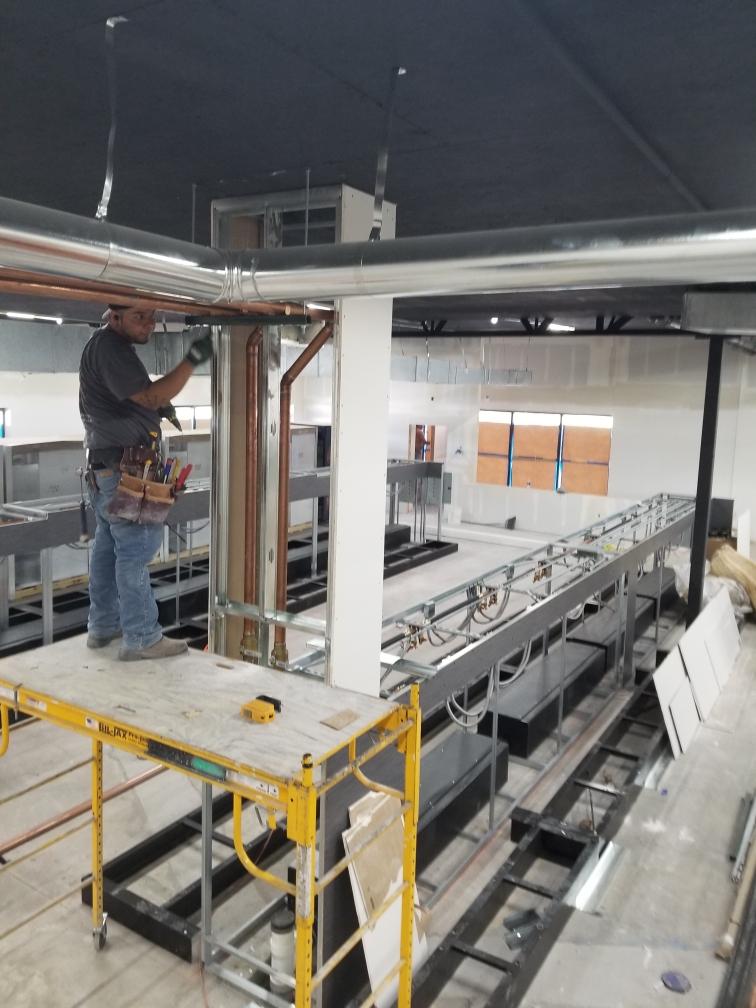
MEP Coordination Before Board Goes Up
Drywall goes up after the mechanical, electrical, and plumbing rough-in is complete and inspected. Hanging board too early creates rework that adds cost and delay to the whole project.
We confirm MEP rough-in is finished before we start. We account for electrical boxes, plumbing penetrations, and HVAC register cutouts so the board is cut cleanly around them rather than patched after the fact.
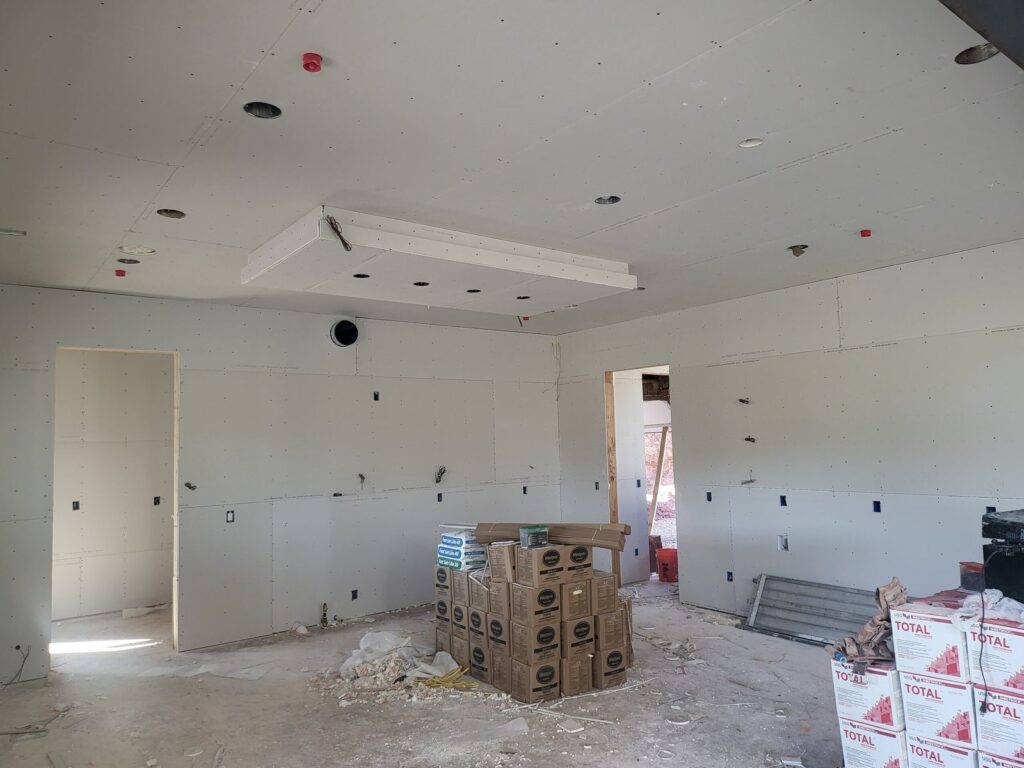
On new construction and additions, clean penetration cutouts save the finishing crew hours and keep the final surface flat around every outlet, switch, and register. Sloppy cutouts show through the finish.
For builders working across the region, our guide on drywall installation tips for new construction in Central Texas details the sequencing we follow on every job.
Taping, Finishing, and Texture
Hanging board is half the job. The finish decides whether the paint looks sharp or shows every seam.
ROA’s drywall taping uses paper tape on structural joints and feathered finish coats that hold under Bell County clay movement.
We deliver Level 4 finishing as the residential standard before flat or eggshell paint. Level 5 is specified for high-gloss paint and rooms where directional lighting reveals surface variation.
Once finished, we apply texture to match your specification. Our spray and hand texture services cover orange peel, knockdown, skip trowel, and smooth finishes across Temple homes.
Keeping the project with one crew from board through texture and paint eliminates the coordination gaps between trades where scheduling problems and finish defects usually start.
New Construction, Additions, and Garage Conversions
ROA handles the full range of residential installation scopes across Temple and Bell County.
- New construction: whole-home drywall for production and custom builds, hung and finished to builder schedules without creating problems for the painter.
- Room additions: matching new drywall to existing walls and ceilings, including texture matching at the tie-in so the addition reads as part of the original home.
- Garage conversions: converting garage space to living area, which requires proper insulation backing, fire separation where applicable, and finished walls ready for paint.
- ADUs and secondary structures: full drywall scope for accessory dwelling units and detached spaces on Temple properties.
Temple ISD and Belton ISD growth keeps new residential construction active across the city. We work directly with homeowners and builders on installation scopes of every size.
Commercial Drywall Installation in Temple
ROA also handles commercial drywall installation for office build-outs, retail interiors, and tenant finish-outs across Temple and Bell County.
Commercial scopes often pair drywall installation with metal stud framing, fire-rated assemblies, and Level 4 or Level 5 commercial finishes. We handle framing through finished board in one scope.
Commercial installation carries different panel and finish requirements than residential. Abuse-resistant board in corridors, moisture-resistant board in commercial restrooms, and fire-rated assemblies where code requires them are all part of a proper commercial install.
Professional Drywall Installation Cost in Temple TX
Installation pricing depends on square footage, panel type, finish level, and ceiling versus wall proportion. Every project gets an itemized quote before work starts.
- New construction installation: quoted per project by square footage of board and specified finish level.
- Room addition drywall: quoted by addition size, including texture matching at the tie-in.
- Garage conversion: quoted by square footage and whether fire separation and insulation backing are in scope.
- Level 4 versus Level 5 finish: Level 5 adds cost for the full skim coat and additional sanding.
- Commercial installation: quoted per project by panel type, fire rating, and finish level.
ROA does not issue surprise invoices. The estimate you approve is the price you pay.
Temple residential and commercial permit activity is tracked through the Temple Planning Department.
Why Temple Builders and Homeowners Choose ROA
- Installation built for clay. We hang and fasten with Bell County soil movement in mind, which prevents the nail pops and cracks that rushed installs produce.
- 24-hour response. Call 512-293-9899 today and hear back the same day or the next morning.
- No subcontracting. Omar’s crew handles your project from panel to finish. The crew that installs is accountable for the result.
- Framing through paint in one scope. One crew, one schedule, one point of accountability from board to finished wall.
- Builder schedule discipline. We keep pace with builder timelines without cutting the corners that create callbacks.
- 5-star rated. Our reviews reflect what Central Texas homeowners and builders say after the job is done.
Browse completed work in the ROA Drywall projects gallery, and see the full scope of services on the Temple drywall contractor page.
For more guides across Central Texas, visit the ROA Drywall resources page, or follow our work on Instagram and Facebook.
FAQs: Professional Drywall Installation in Temple TX
How Long Does Drywall Installation Take in Temple?
A single room installs and finishes in one to three days including compound drying time. Whole-home new construction is scheduled by project size. We confirm the timeline at the estimate.
What Drywall Thickness Should Be Used in a Temple Home?
Half-inch board is standard for most interior walls and ceilings. Five-eighths inch Type X is required for garages, fire-rated assemblies, and wide-span ceilings to prevent sag over time.
Do I Need a Permit for Drywall Installation in Temple TX?
New construction and structural remodels require permits in Temple. Standard drywall installation within an existing permitted project usually does not. We flag permit requirements at the estimate if they apply.
Can ROA Match Existing Texture on a Room Addition?
Yes. We match orange peel, knockdown, skip trowel, and smooth textures at the tie-in so the addition reads as part of the original home. We identify the texture at the estimate.
Does ROA Work With Temple Builders and General Contractors?
Yes. We work directly with builders and GCs on new construction and commercial installation across Temple and Bell County. Contact Omar at 512-293-9899 to discuss subcontracting terms.
ROA Drywall delivers professional drywall installation in Temple TX built to last.
Call or text: 512-293-9899. We respond within 24 hours.
Free estimate available on request through our contact page.
ROA Drywall also serves Belton, Georgetown, and 20+ cities across Central Texas.